

Transport Layer
Transport Control Protocol (TCP)
- Operation of TCP
- When a sender transmits a segment, it also starts a timer.
- When the segment arrives at the destination, the receiving TCP entity sends back a segment (with data if any) bearing an acknowledgement number equal to the next sequence number it expects to receive.
- If the sender’s timer goes off before the acknowledgement is received, the sender transmits the segment again.
- 3-way handshaking
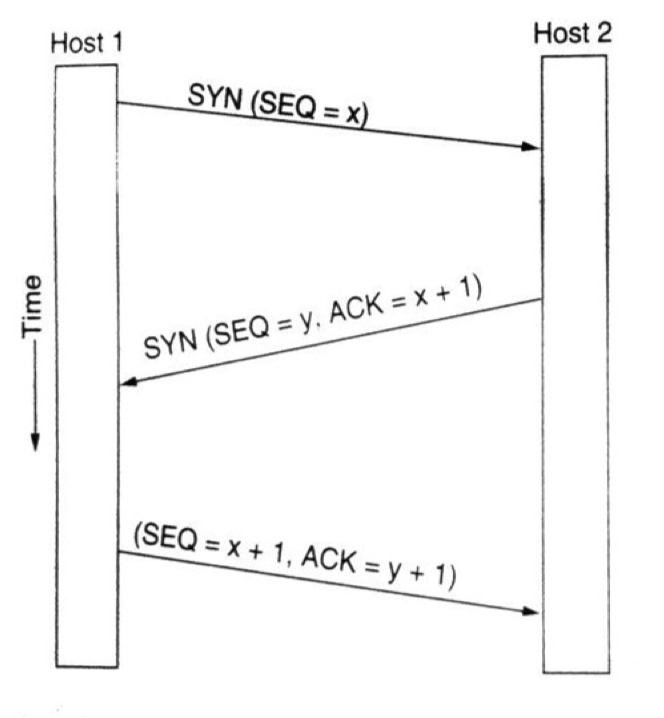
- To release a connection, either party can send a TCP segment with the FIN bit set.
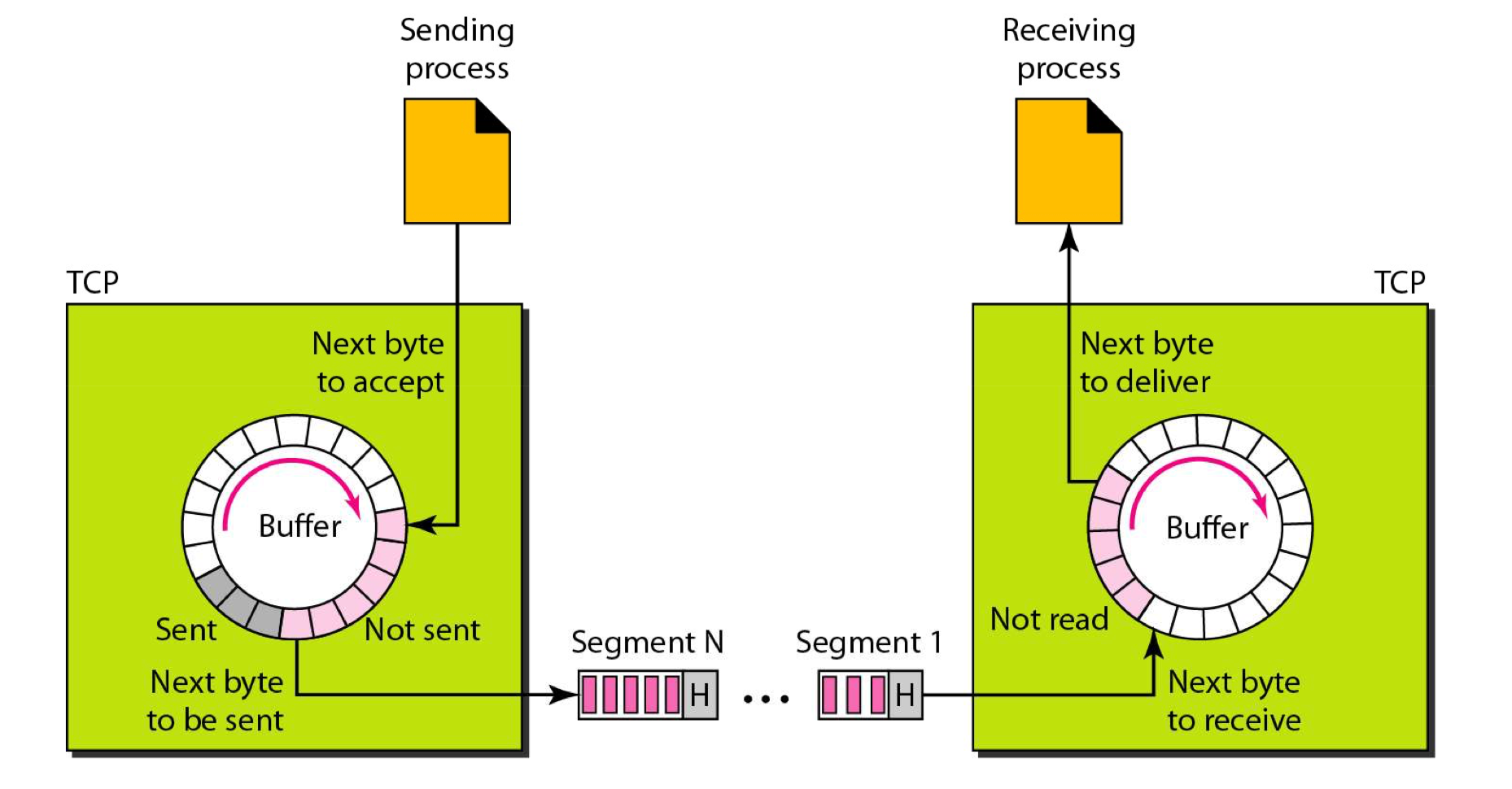
TCP Segments
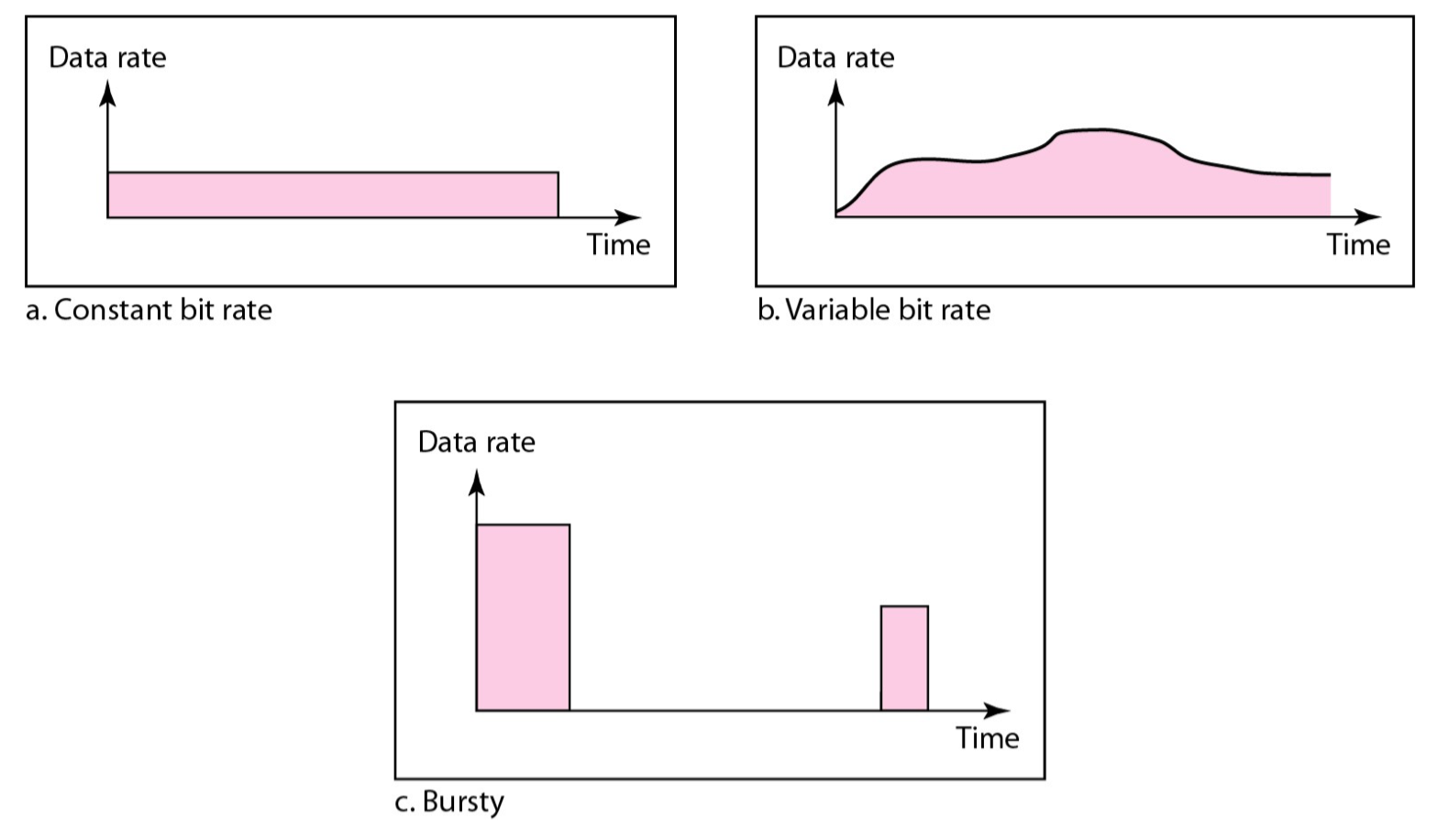
Data Traffic
The main focus of congestion control and quality of service is data traffic.
- In congestion control we try to avoid traffic congestion.
- In quality of service, we try to create an appropriate environment for the traffic.
- So, before talking about congestion control and quality of service, we discuss the data traffic itself.
Congestion Control
In general, we can divide congestion control mechanisms into two broad categories: open-loop congestion control (prevention) and closed-loop congestion control (removal).
- Open-loop
- Retransmission Policy
- Window Policy
- Acknowledgement Policy
- Discard Policy
- Admission Policy
- Closed-loop
- Back Pressure
- Choke Packet
- Implicit signaling
- Explicit signaling
Metrics Used to Monitor a Subnet for Congestion
- Percentage of all packets discarded for lack of buffer space;
- Average of queue lengths;
- Number of packets that time out and are retransmitted;
- Average packet delay;
- Standard deviation of packet delay, etc.